



Every marathon is 26.2 miles. But anyone who has run more than one knows that's where the similarities end. A PR in Berlin and a PR in Boston are not the same achievement, and a finish time at a mountain marathon tells a completely different story.
Here's what really makes one marathon different from another.
1. Elevation profile
Total climbing is only half the story. Where the hills are matters just as much. Boston is known for its downhill start that punishes the quads, followed by the Newton Hills between miles 16 and 21. New York packs five bridges into its course. Berlin and Chicago, by contrast, are famously flat, which is why so many world records have been set there.
2. Weather
Temperature is one of the biggest factors in marathon performance. Studies of race results show that finish times slow as temperatures climb above the cool range of roughly 40 to 55°F, and the effect is stronger for runners who spend more hours on the course. Humidity, wind and start time all play a role too. Fall races in Berlin and Chicago usually offer cooler conditions; late spring races can be a gamble.
3. Course shape and record eligibility
For a time to count as a world record, World Athletics has strict rules: the start and finish can't be too far apart, and the total elevation drop is limited. Boston fails both criteria because it's a point-to-point course with a net downhill. That's why some of the fastest marathon times ever run in Boston don't count as records.
4. Crowds and atmosphere
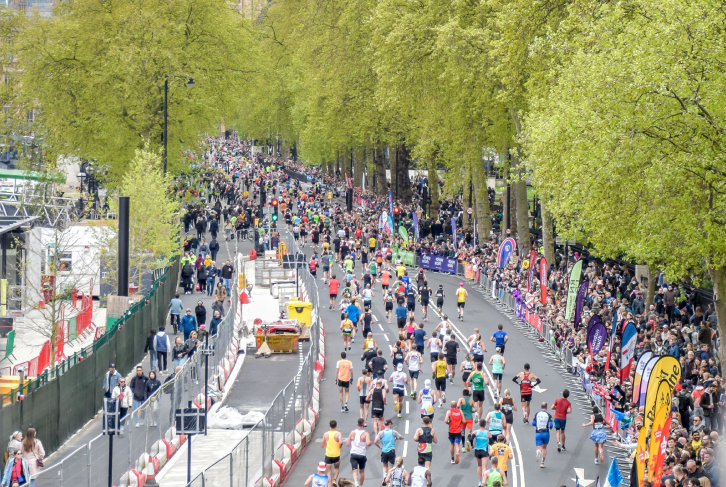
Don't underestimate the crowd. A wall of noise at mile 23 can be worth more than any gel. Big city marathons like London, New York and Tokyo are famous for spectators lining almost every mile. Smaller races can be quieter, which some runners love and others find mentally tough.
5. Logistics
Early wake-ups, long waits in corrals, crowded starts and travel across time zones all affect how you feel on the start line. A race that's harder to get to is often harder to run well.
The World Marathon Majors
For many runners, the ultimate collection is the Abbott World Marathon Majors: Tokyo, Boston, London, Sydney, Berlin, Chicago and New York. Each has its own personality, from Boston's qualifying standards to Berlin's record-friendly streets. Sydney officially became the seventh Major in 2025.
Choosing your next marathon
Ask yourself what you want from the race:
- A PR? Look for a flat course, a cool-weather date and good pacing groups.
- An experience? Choose big crowds, iconic landmarks or a destination race.
- A challenge? Try a hilly, trail or mountain marathon and leave the pace pressure behind.
And when you compare your time with a friend's, ask one simple question first: which marathon?