


The Farsighted Runner's Edge
Sommaire

“See Further, Run Faster?”
Crystal Clear Performance: How ENGO Solves the Age-Group Visibility Challenge
For many age-group athletes, a frustrating physiological reality often goes undiscussed: presbyopia—the gradual loss of near vision that typically begins around age 40. This natural aging process creates a unique challenge for endurance athletes who need to monitor performance metrics during training and racing.
The Presbyopia Performance Puzzle
According to optometric research, approximately 83% of adults over 45 experience some degree of presbyopia. For athletes, this creates a perfect storm of challenges:
- Small watch displays become increasingly difficult to read at arm's length
- The dynamic motion of running further complicates focusing
- Traditional reading glasses are impractical during exercise
- Multifocal contact lenses can distort distance vision needed for safety
This vision challenge creates what sports optometrists call "performance hesitancy"—athletes become reluctant to check critical metrics, leading to suboptimal pacing and training zone adherence.
The Age-Group Athlete Experience
Many master's athletes in the ENGO community have experienced this challenge firsthand. Marathon runner Min Park describes how ENGO transformed his Boston Marathon experience: "Seeing my pace right there in my field of view—without having to break stride to look at my watch—was amazing! I was pleasantly surprised to have averaged a pace slightly faster than my goal during this last challenging section."
For master's athletes like Justin Fiske (2:28 marathon PR), the ability to see metrics clearly becomes increasingly valuable with age: "I use Engo 2 to monitor my pace, overall time elapsed, and heart rate, these are absolutely critical for any speed, threshold, tempo run or long runs! I also don't have to look down at my watch ever!"
The Optical Solution: Distance Projection
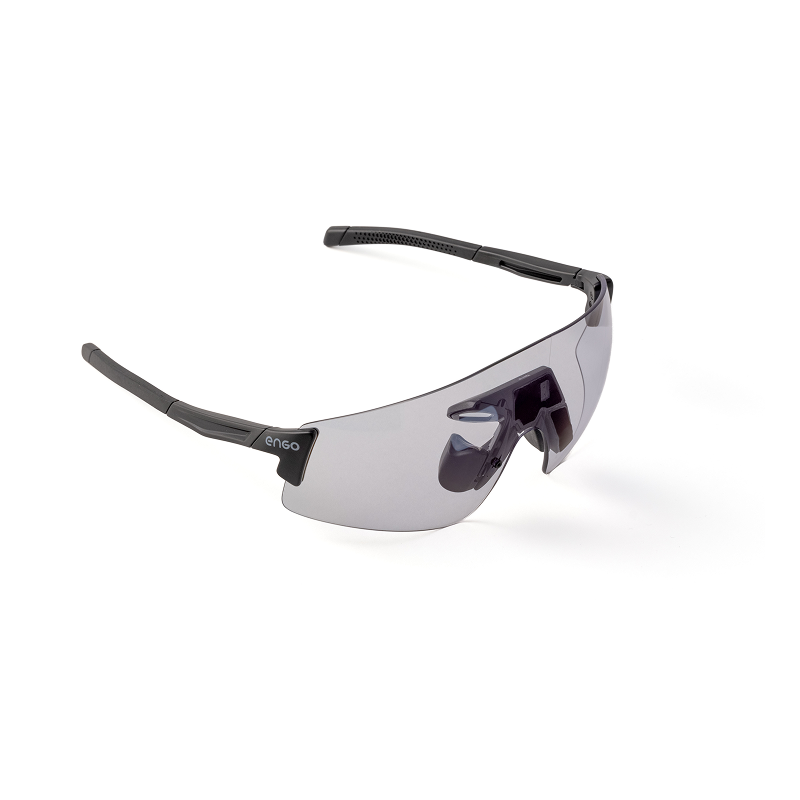
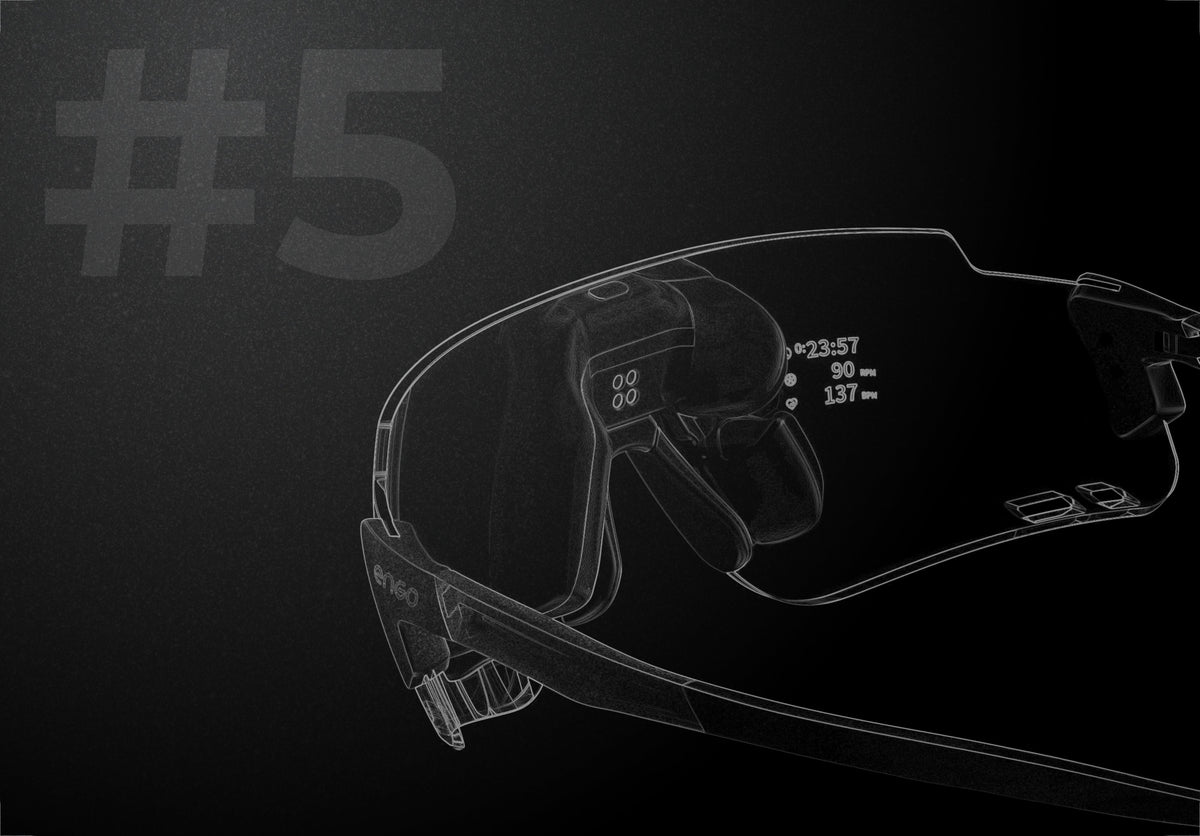
ENGO's heads-up display technology utilizes what vision scientists call "virtual image distance"—projecting performance metrics at a comfortable viewing distance that eliminates the need for reading correction.
This optical innovation creates several advantages for farsighted athletes:
- Optimal focal distance - Metrics appear at a comfortable distance for aging eyes
- Enhanced visual stability - Information remains clear regardless of running motion
- Eliminated accommodation strain - No constant refocusing between distance and near vision
- Maintained safety awareness - Peripheral vision remains uncompromised
The Performance Impact of Visual Clarity
Research in sports optometry indicates that visual strain can increase perceived exertion by 5-8%—meaning unclear metrics don't just frustrate athletes, they actually make running feel harder.
Long-distance triathlete Markus Marthaler notes: "The head up display in the googles are a game changer, similar to the FORM goggles in Swimming. It lets me see my pace and where I am at in real-time and it is very accurate!"
For age-group athletes, this clarity translates directly to improved performance through:
- More consistent pacing (no guessing when numbers are blurry)
- Better training zone adherence (clear heart rate numbers)
- Reduced stress and improved focus (eliminating the frustration of squinting)
- Enhanced safety (eyes remain on the road/trail, not struggling with watch)
By solving the unique visual challenges faced by farsighted athletes, ENGO doesn't just offer convenience—it levels the playing field, allowing experienced athletes to leverage their years of endurance wisdom without being hindered by the natural aging process of their visual system.
Discover engo3
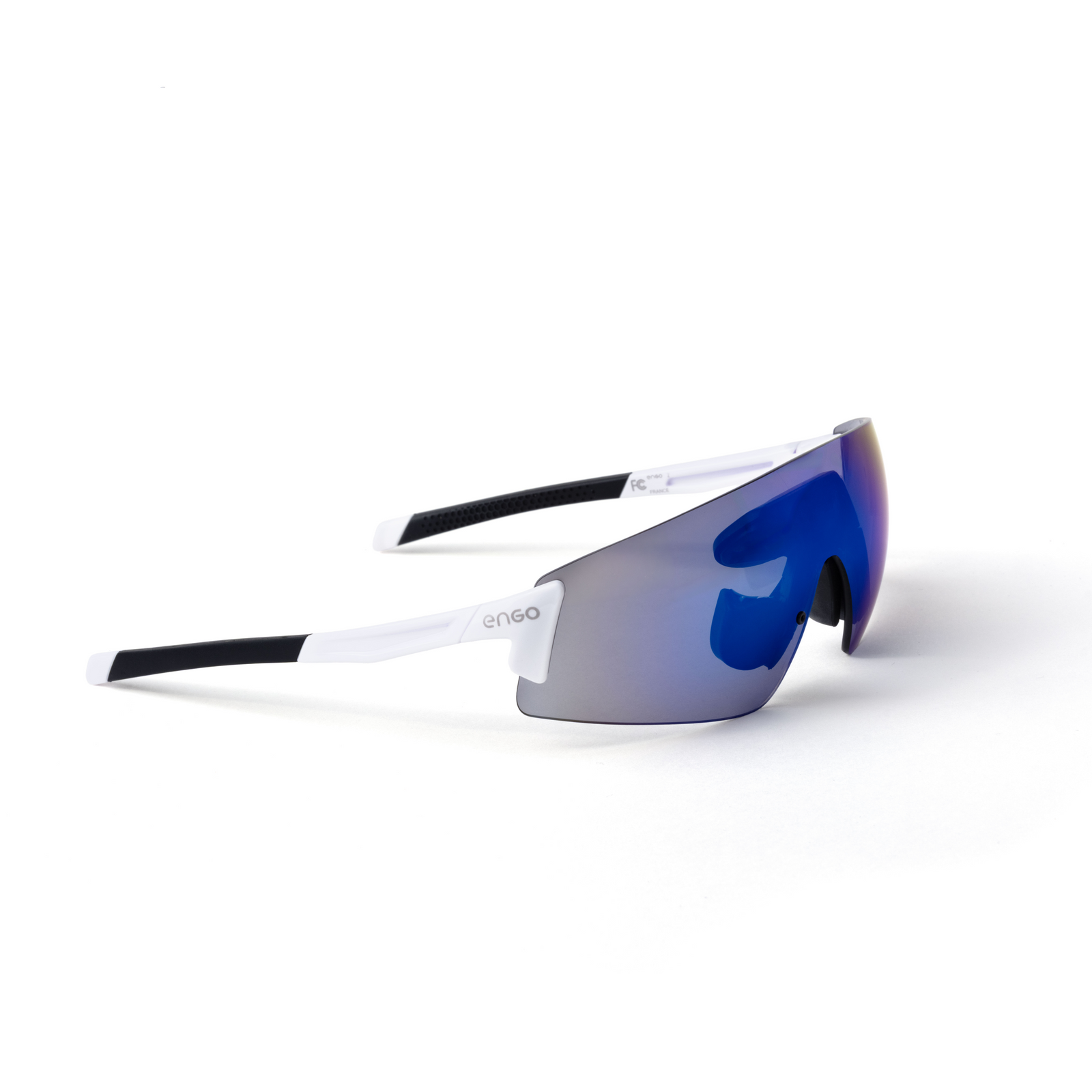
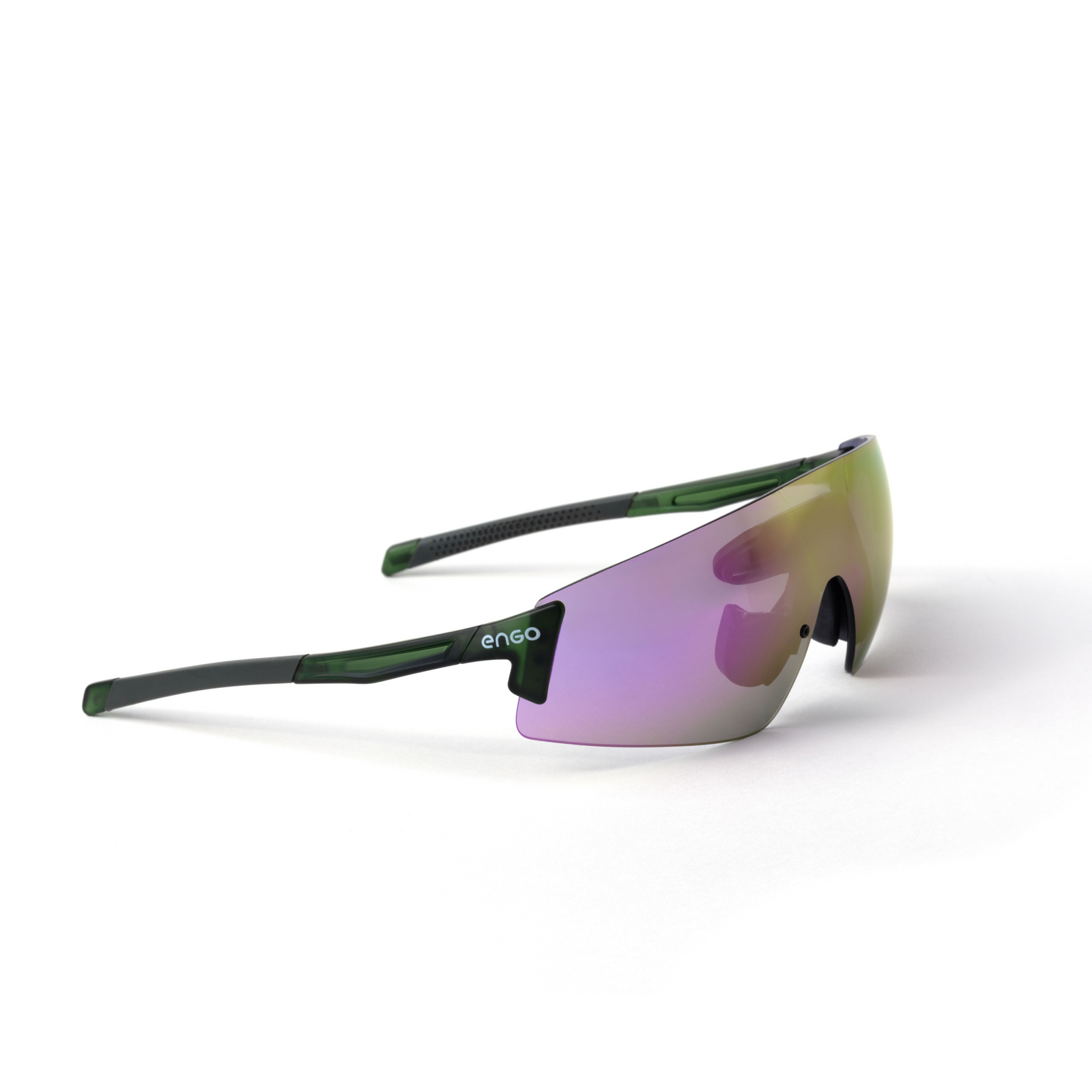
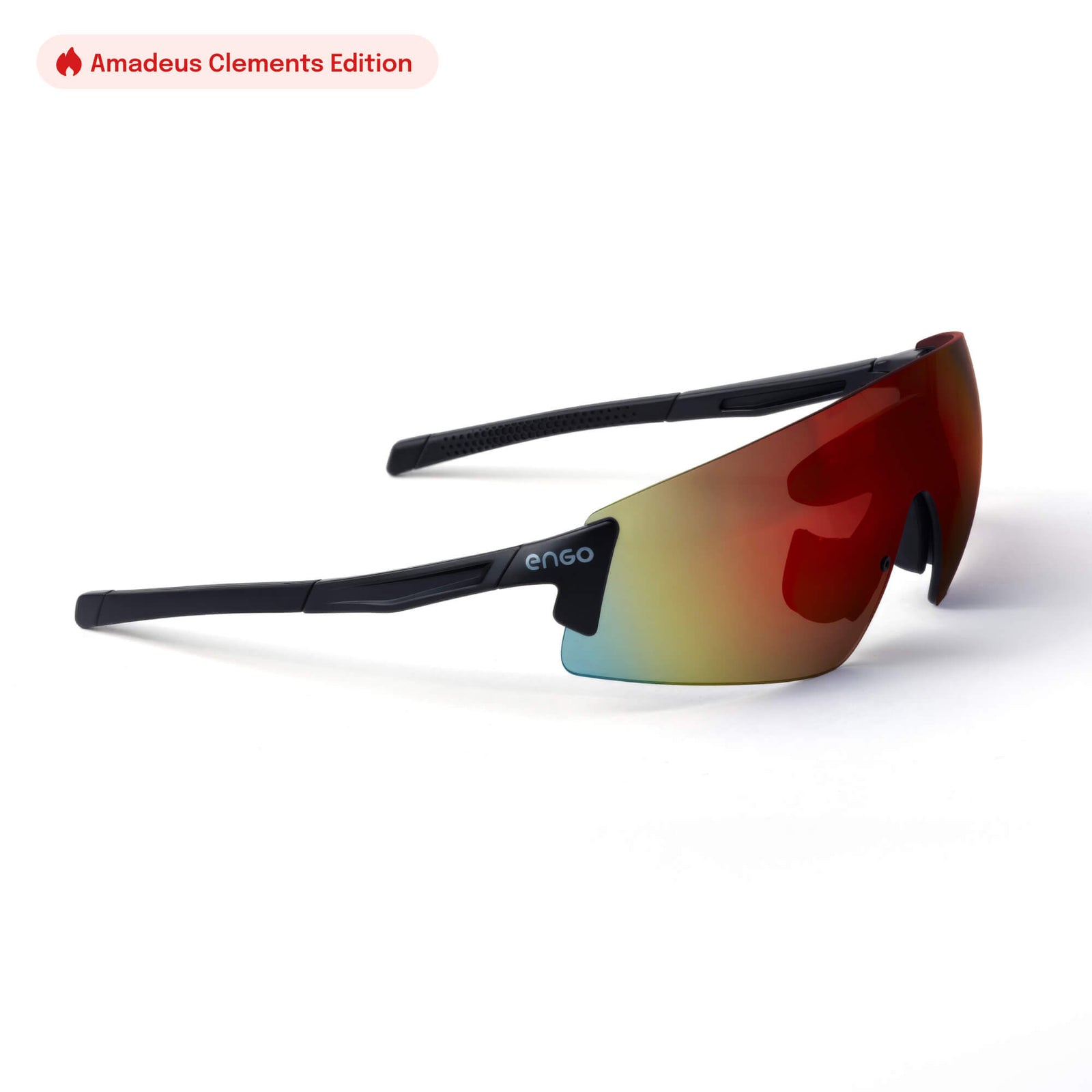
Everything runners ask, answered.
Will I even notice a difference?
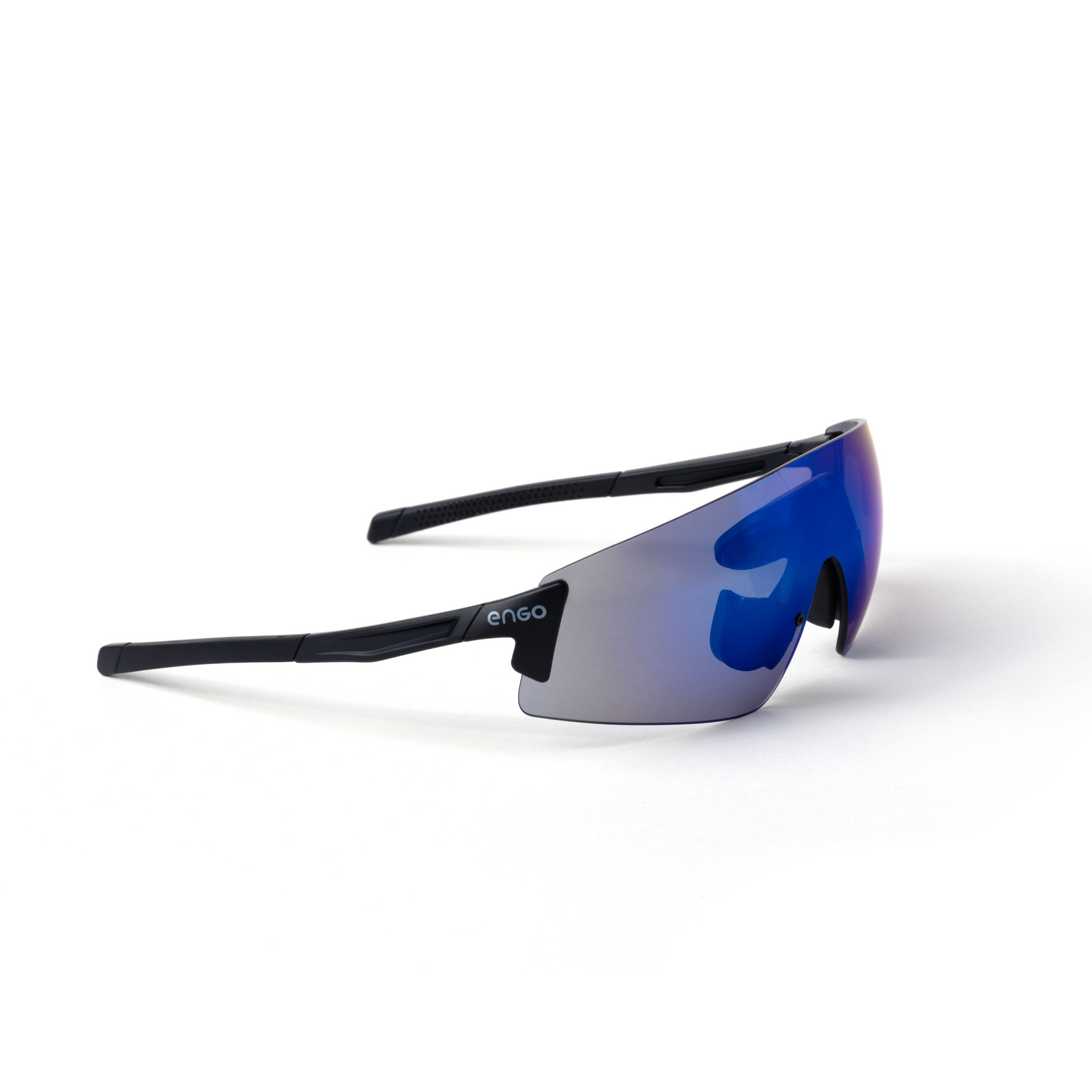
The engo3 uses fixed tinted lenses (category 3), perfect for very sunny conditions. The engo3 Photochromic features photochromic lenses that automatically adapt to light levels (cat. 0 to 3), making it ideal for changing light conditions.
Is engo3 compatible with Garmin?
Yes it is, with over 81+ models of Garmin devices, plus Apple Watch.
How is engo3 different from Meta Oakley Vanguard?
engo3 is a pure performance display built for serious runners and cyclists: a lightweight AR heads-up display (38.5g) that projects your stats (pace, heart rate, cadence, and more) right in your line of sight, with 20+ hours of battery life and no camera, music, or notifications to distract you.
The Oakley Meta Vanguard is a general-purpose smart glasses product with a built-in camera and Meta AI, giving you sport stats through voice commands or audio rather than a visual display, with about 9 hours of battery life. In short: engo3 keeps your eyes on the road and your data always visible, Vanguard is a multitasking device where sport is one feature among many.
How long does the engo3 battery last?
24+hours
Can I use engo3 for trail running or ultras?
Yes!
Does engo3 have a camera?
No, engo3 doesn't have a camera. It's built purely as a data display: no camera, no music, no notifications, just your real-time stats (pace, heart rate, cadence, etc.) projected in your field of view. That's a deliberate choice to keep it light (38.5g) and focused on performance rather than content capture.
What is the weight of engo3?
38.5 gr
Read more articles

The +11°C rule: how to actually dress for cold weather running
The science-backed rule that stops you from overdressing on cold mornings, plus a few field-tested hacks from the engo 6AM Club.
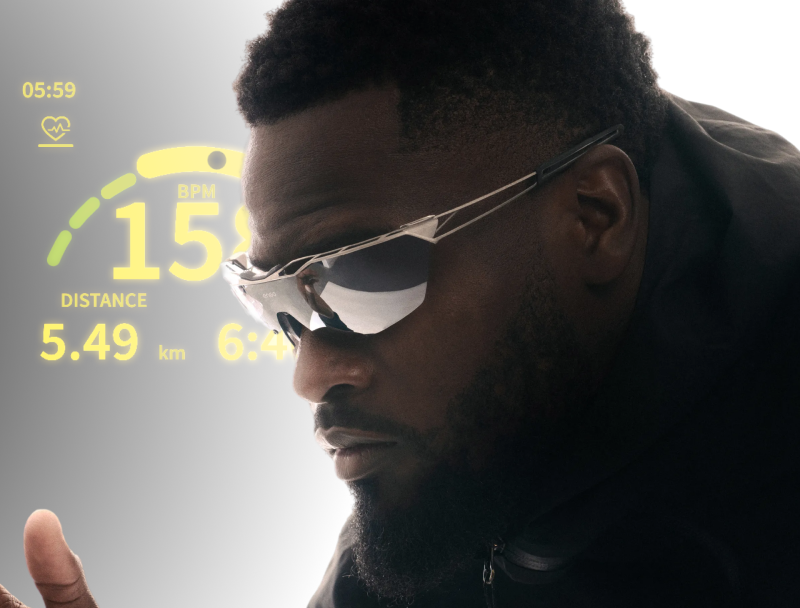
engo3 Titanium: built to disappear
500 frames. Aerospace-grade titanium, grown layer by layer, 28,9 grams total. Discover why we engineered engo3 Titanium, and why some objects are worth owning for a lifetime.

The work behind the display: three months of software updates
A note from engo's software lead on what's changed since launch, for both Garmin and Apple Watch users.

Compatible Devices
Works with most Garmin and Apple Watch. See the complete list of supported devices and third-party apps that work seamlessly with engo.
Check the compatibility of your device
Get Started in Minutes
Step-by-step instructions for pairing ENGO with your specific watch model. Clear, simple guidance to get you from unboxing to your first run in under 5 minutes.
Connect ENGO to your device
Returns
Train with engo for 30 days. If it doesn't transform your running, return it free with our prepaid label. Full refund, no questions asked, no restocking fees.
See Return Process
Questions? We're Here.
Browse our FAQ library, explore detailed setup guides, search our help database, or chat directly with our support team. Real help when you need it.
Visit Support Center