

Amadeus Clements felt something wrong in his foot before the Greek national cross country championship. He thought it was muscular. He raced anyway, and finished third.
After the race, he could not walk.
An MRI showed that half of his heel bone was cracked. The doctor's instructions: wear a boot immediately, and rest for three weeks.
The first question: what can I do?
Most runners hear "no running" and stop there. Amadeus accepted the diagnosis and asked one question straight away: what training can I still do?
The answer was swimming. Then cycling. Then the gym.
"I thought I want to train as much as possible so I don't lose as much fitness and I can come back quickly," he says. So he kept adding time in the pool, on the bike and in the gym, until he reached 40 hours of aerobic training per week.
To be clear, 40 hours is an elite number, from an athlete whose full-time job is training. It is not a target for anyone else. What matters is the principle behind it.
An injury as an opportunity
"I saw this injury as an opportunity to build an incredible aerobic base," Amadeus says. "Yes, I couldn't run, but I could spend all my time building an extraordinary aerobic engine."
The logic is sound. Your heart and lungs do not know which sport you are doing. Swimming and cycling still ask them to deliver oxygen to working muscles for long periods, so your aerobic fitness can be maintained, and sometimes improved, while the injured bone heals. What you lose is running-specific: the way your tendons, bones and muscles handle impact, and your running economy. Those come back with time once you run again.
Tracking the work
Amadeus did not cross-train at random. He tracked his weekly hours and made sure they increased progressively.
He also watched his heart rate, and noticed it was dropping in his workouts. Same session, lower heart rate. "I knew that there is a lot of good work going on."
A falling heart rate for the same effort is one of the clearest signs that your aerobic system is adapting. It is free to measure, and it keeps you motivated when there is no pace or distance to show for your work.
The mental side
"What kept me mentally okay during my injury was that I know that I'm doing the best I can do right now."
For Amadeus, the injury was not a loss of motivation. "There is no motivation loss. It was just a process of learning how to train differently." He also wanted to set an example for younger athletes: an injury does not have to cost you your confidence.
His method is short: "I just follow the process. Cross train until you're ready."
The first run back
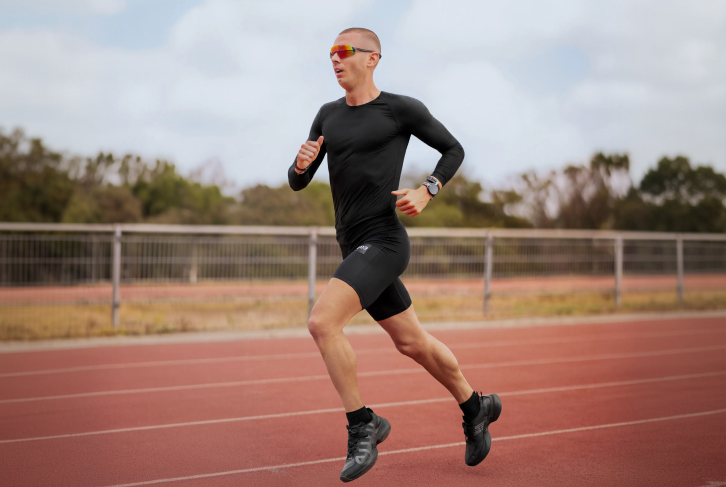
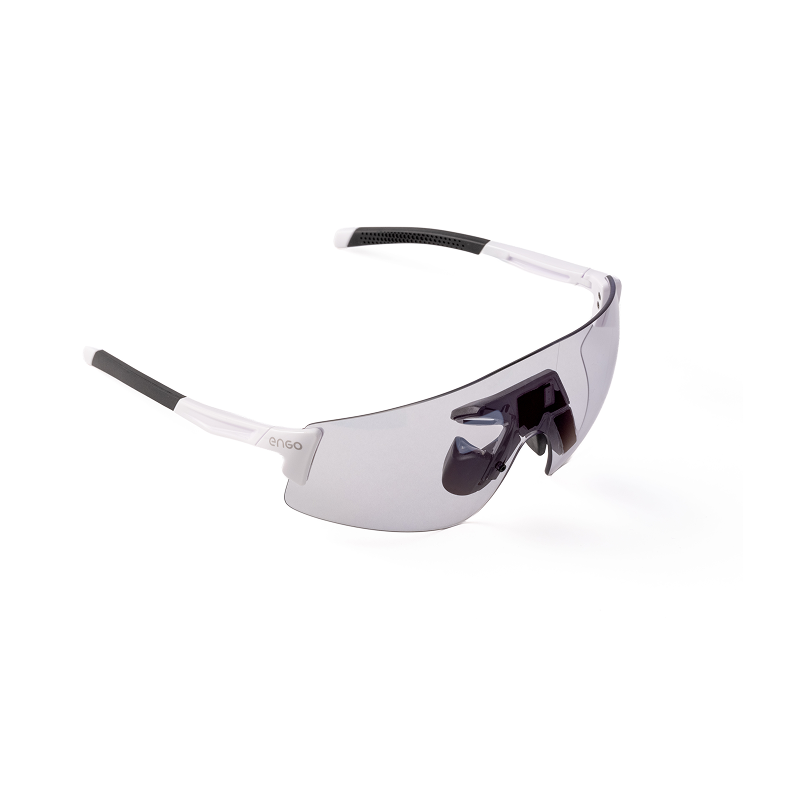
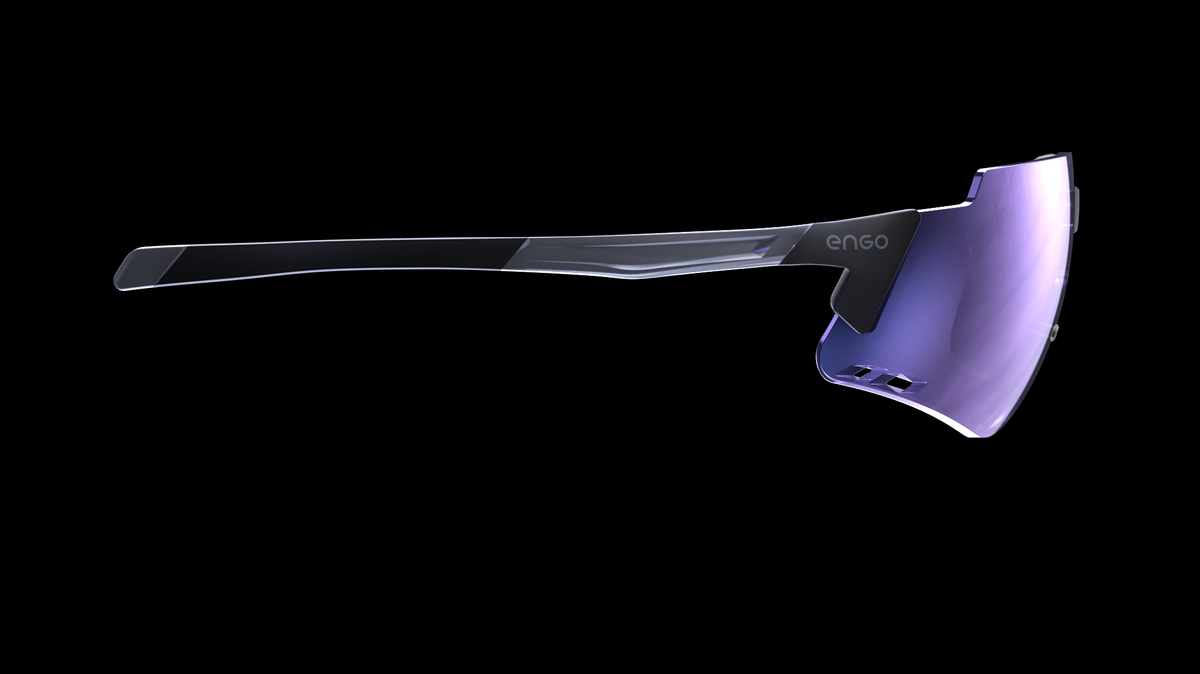
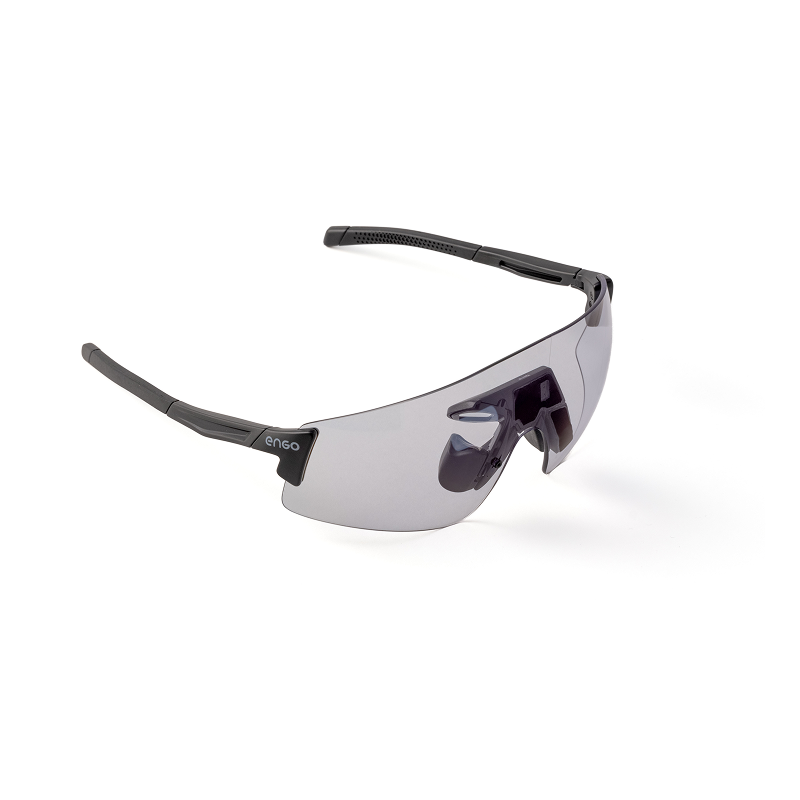
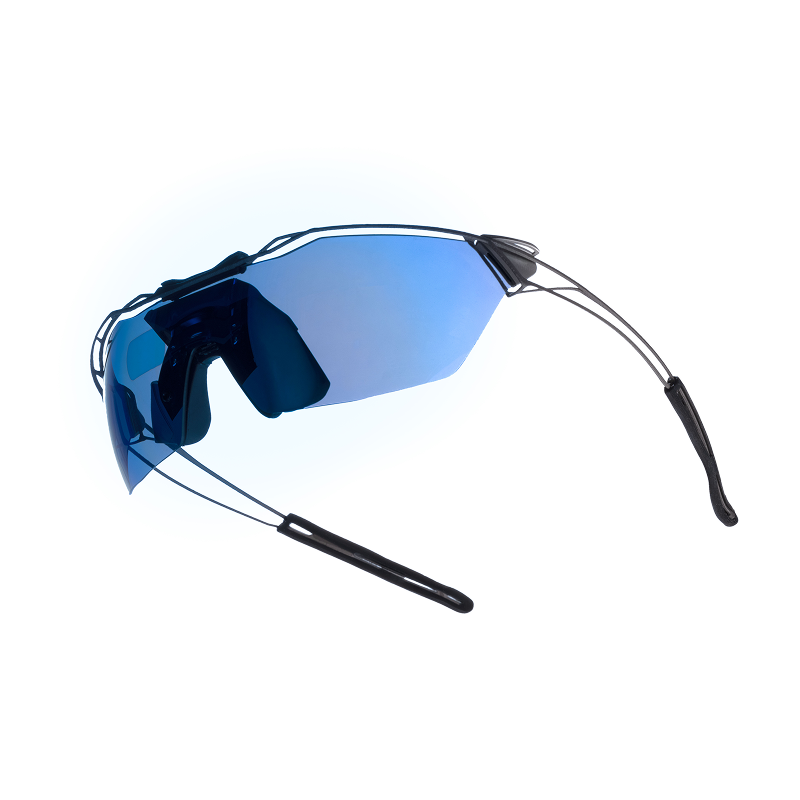
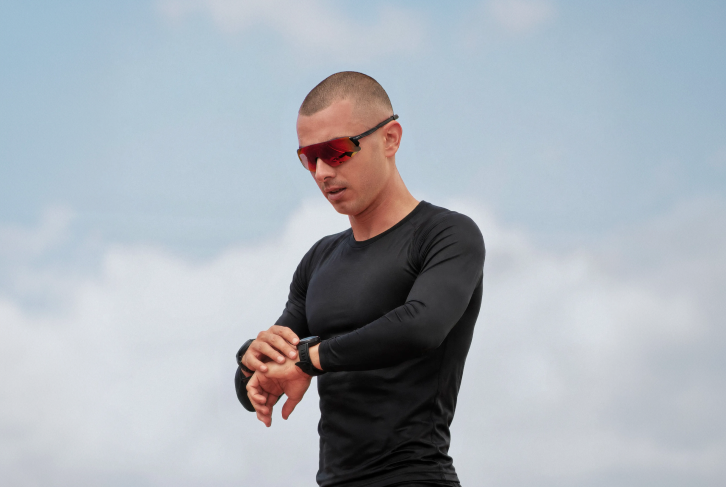
When the doctor cleared him to run, he put on his engo glasses and went for a jog.
He was running at around 7 minutes per kilometer, at 130 beats per minute. For an athlete who races a half marathon at close to 3 minutes per kilometer, it was a pace he had never seen on his display.
"I just laughed, because I knew that it's just a matter of time till it gets back to normal."
That first run says a lot about coming back from a bone injury. The engine was there. The legs needed time. Running slowly at first is not a sign of lost fitness. It is how bone and tendon get the chance to catch up with your heart and lungs.
Shortly after, he learned he would do his pre-season in Kenya, ahead of the Athens Marathon. "I was very excited, I was looking forward to come back to my second home and train very hard."
If you are injured right now
- Ask your doctor or physio what you are allowed to do, and in which order. Your plan depends on the injury.
- Pick low-impact options that are safe for you: pool swimming, deep-water running, cycling, the elliptical.
- Start from your usual weekly training time, not from an elite number, and increase gradually.
- Keep your structure. Mostly easy sessions, a few harder ones, and rest days, just like your running plan.
- Use heart rate to steer your effort and to see your fitness improve.
- Track your weekly hours, so you can see the work adding up.
- Return to running slowly, even if your heart and lungs feel ready. Your bones need more time.
As Amadeus puts it: "When you get injured, you just follow the process and come back stronger."
This article is for general information only and does not replace medical advice. If you think you have a bone stress injury, see a sports physician.
Follow Amadeus's comeback in the Road to Athens series on YouTube.